
Under Sink Water Filter Systems
An under sink water filter system is one of the most effective and affordable ways to get clean, great-tasting drinking water directly from your kitchen tap.
Hidden discretely under your countertop, these compact systems reduce chlorine, sediment, fluoride, heavy metals, bacteria, and other contaminants — without taking up any bench space or requiring bottled water.
At Clarence Water Filters, we stock Australia’s widest range of under sink water filters for town water, tank water, and fluoride removal — from trusted brands including 3M, Brita, Omnipure, and Pentair.
Whether you need a simple high-flow system that connects to your existing mixer tap, a dedicated drinking water tap setup, or a full reverse osmosis system, we have an option to suit your home, budget, and water quality.
Not sure where to start? Call our friendly team on 02 6646 8565 for free, no-obligation advice — we’ve been helping Australians find the right water filtration solution for over 20 years.
You can also click here to learn more about under sink water filters or browse our undersink filter systems below.
Showing all 20 results
-
Tank Water and Untreated Water Supplies (10)
-
Town Water Systems (14)
-
Town Water Fluoride Systems (6)
-
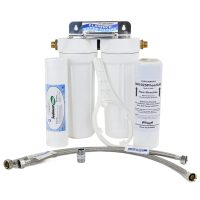 Town or Tank Water
Twin High Flow Under Sink Water Filter System
Twin high-flow water filter system designed for use with a mixer tap. QMP housings on a mounting bracket, with brass nipples for easy connection to the Braided stainless steel flex hoses.
Twin High Flow Under Sink Water Filter System
Twin high-flow water filter system designed for use with a mixer tap. QMP housings on a mounting bracket, with brass nipples for easy connection to the Braided stainless steel flex hoses.
-
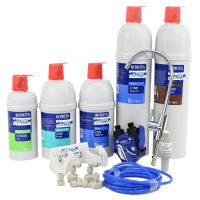
Brita Under Sink Filtered Drinking Water Systems
Brita Under Sink Drinking Water Filtration System with optional dedicated tap. Ideal for reducing chlorine, bad taste odour, and other impurities from your water. Filter options for scale reduction also… View ArticleBrita Under Sink Filtered Drinking Water Systems
Brita Under Sink Drinking Water Filtration System with optional dedicated tap. Ideal for reducing chlorine, bad taste odour, and other impurities from your water. Filter options for scale reduction also… View Article -
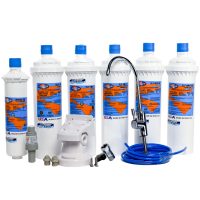 NEW!
NEW!Omnipure™ ELF Under Sink Water Filter Kit
Omnipure™ ELF Series Under Sink Water Filter System. USA-made high quality filter kit producing delicious, clean water. Omnipure is one of the world’s leading manufacturers of water filter systems Established… View ArticleOmnipure™ ELF Under Sink Water Filter Kit
Omnipure™ ELF Series Under Sink Water Filter System. USA-made high quality filter kit producing delicious, clean water. Omnipure is one of the world’s leading manufacturers of water filter systems Established… View Article -
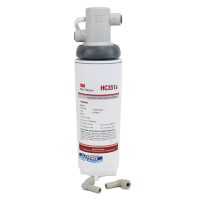 Town Water
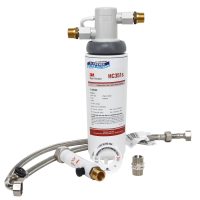
Undersink Conversion Kit VH3-HC351
VH3-HC351+Head filter kit by 3M™ This conversion kit includes of a 3M™ VH3 filter head and 3M™ HC351-S. Used to replace older filters and systems that have been discontinued including:… View ArticleUndersink Conversion Kit VH3-HC351
VH3-HC351+Head filter kit by 3M™ This conversion kit includes of a 3M™ VH3 filter head and 3M™ HC351-S. Used to replace older filters and systems that have been discontinued including:… View Article -
 Town Water
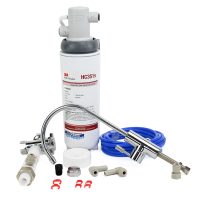
3M HiFlow Under Sink Inline Water Filter System
The Quick change 3M™ filter cartridge filtration systems will reduce Chlorine taste odour, scale and other impurities from your water. High flow system designed to connect to standard mixer tap… View Article3M HiFlow Under Sink Inline Water Filter System
The Quick change 3M™ filter cartridge filtration systems will reduce Chlorine taste odour, scale and other impurities from your water. High flow system designed to connect to standard mixer tap… View Article -
 Town Water
3M Under Sink Filtered Drinking Water Systems
Quick change 3M™ under sink filtration system to reduce Chlorine taste odour, scale and other impurities from your water. The systems are very easy to install with most of the… View Article3M Under Sink Filtered Drinking Water Systems
Quick change 3M™ under sink filtration system to reduce Chlorine taste odour, scale and other impurities from your water. The systems are very easy to install with most of the… View Article -
 NEW!Town Water
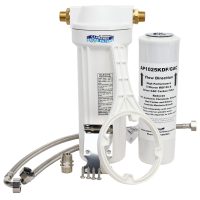
Single High Flow Under Sink Water Filter System
Single high-flow water filter system designed for use with a mixer tap. QMP housings on a mounting bracket, with brass nipples for easy connection to 1/2″ braided stainless steel flex hoses.
Single High Flow Under Sink Water Filter System
Single high-flow water filter system designed for use with a mixer tap. QMP housings on a mounting bracket, with brass nipples for easy connection to 1/2″ braided stainless steel flex hoses.
-
 NEW!Tank Water
Single High Flow Under Sink Water Filter System For Tank Water
Single high-flow water filter system for Tank Water. QMP housings on a mounting bracket, with brass nipples for easy connection to 1/2″ braided stainless steel flex hoses.
Single High Flow Under Sink Water Filter System For Tank Water
Single high-flow water filter system for Tank Water. QMP housings on a mounting bracket, with brass nipples for easy connection to 1/2″ braided stainless steel flex hoses.
-
 Town or Tank Water
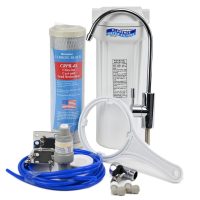
Single Under Sink Water Filter Systems
American Made quality housing system with fittings for easy installation and optional dedicated drinking water tap. The single under sink filter system is ideal for water supplies that do not… View ArticleSingle Under Sink Water Filter Systems
American Made quality housing system with fittings for easy installation and optional dedicated drinking water tap. The single under sink filter system is ideal for water supplies that do not… View Article -
Town or Tank Water
Twin Under Sink Water Filter Systems
High-quality under sink water filter system featuring American Made QMP housings. System is complete with tap and all the fittings you need for easy installation. The twin under sink system… View ArticleTwin Under Sink Water Filter Systems
High-quality under sink water filter system featuring American Made QMP housings. System is complete with tap and all the fittings you need for easy installation. The twin under sink system… View Article -
Tank Water
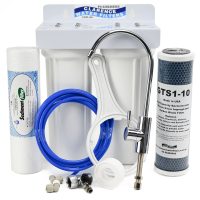
Tank Water Single QMP Under Sink Filter System
Single under sink water filter system for tank water. Features American-made QMP housing with GTS1-10 silver impregnated carbon filter. U.S.A Made quality system complete with tap and fittings for easy installation…. View ArticleTank Water Single QMP Under Sink Filter System
Single under sink water filter system for tank water. Features American-made QMP housing with GTS1-10 silver impregnated carbon filter. U.S.A Made quality system complete with tap and fittings for easy installation…. View Article -
 Tank Water
Tank Water Twin QMP Under Sink Water Filter System
U.S.A Made quality housings complete with tap and fittings for easy installation. Tank water system without a pressure limiting valve for use on water pump applications. Convenient great tasting water on tap in your own… View ArticleTank Water Twin QMP Under Sink Water Filter System
U.S.A Made quality housings complete with tap and fittings for easy installation. Tank water system without a pressure limiting valve for use on water pump applications. Convenient great tasting water on tap in your own… View Article -
 Tank Water
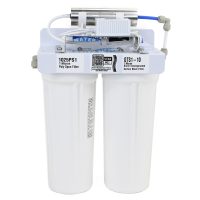
Twin Under Sink Water Filter System with LED UV Steriliser
Under sink water filter system with LED UV steriliser for safe drinking water. Convenient great tasting water on tap in your own kitchen and you will never have to boil… View ArticleTwin Under Sink Water Filter System with LED UV Steriliser
Under sink water filter system with LED UV steriliser for safe drinking water. Convenient great tasting water on tap in your own kitchen and you will never have to boil… View Article -
Town Water
Twin Under Sink Fluoride Water Filter Systems
High quality twin under sink housing system complete with fittings, pressure limiting valve, and fluoride reducing filters of your choice. Optional dedicated drinking tap and leak detector available. The ultimate… View ArticleTwin Under Sink Fluoride Water Filter Systems
High quality twin under sink housing system complete with fittings, pressure limiting valve, and fluoride reducing filters of your choice. Optional dedicated drinking tap and leak detector available. The ultimate… View Article -
 Tank Water
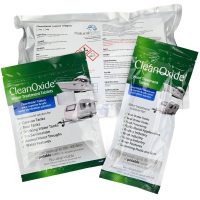
Clean Oxide Chlorine Dioxide Disinfection Tablets
CleanOxide Chlorine Dioxide Water Disinfection Tablets — Rainwater Tanks, Caravans & Boats. CleanOxide™ chlorine dioxide tablets are the most effective way to disinfect and treat rainwater tanks, caravan water tanks,… View ArticlePrice range: $24.00 through $58.50 Select options This product has multiple variants. The options may be chosen on the product pageClean Oxide Chlorine Dioxide Disinfection Tablets
CleanOxide Chlorine Dioxide Water Disinfection Tablets — Rainwater Tanks, Caravans & Boats. CleanOxide™ chlorine dioxide tablets are the most effective way to disinfect and treat rainwater tanks, caravan water tanks,… View Article -
 Town Water
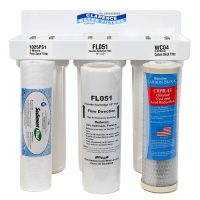
Triple Under Sink Fluoride Water Filter Systems
QMP1/4TripleUS American Made quality housing system complete with tap and fittings for easy installation. Triple systems are excellent where there is a lot of sediment in the water supply and… View ArticleTriple Under Sink Fluoride Water Filter Systems
QMP1/4TripleUS American Made quality housing system complete with tap and fittings for easy installation. Triple systems are excellent where there is a lot of sediment in the water supply and… View Article -
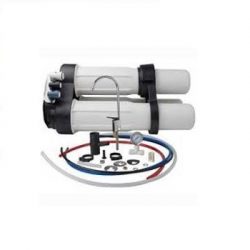
Pentair MPRF RO on Demand Reverse Osmosis System
State of the art reverse osmosis purification system designed by Pentair. The new Pentair PRF-RO System features continuous-flow water production so a storage tank is no longer required. RO water on… View ArticlePrice range: $2,200.00 through $2,350.00 Select options This product has multiple variants. The options may be chosen on the product pagePentair MPRF RO on Demand Reverse Osmosis System
State of the art reverse osmosis purification system designed by Pentair. The new Pentair PRF-RO System features continuous-flow water production so a storage tank is no longer required. RO water on… View Article -
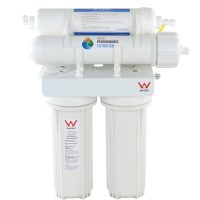
HPF H1-24-K-CPH 4 Stage Alkalising Drinking Water Reverse Osmosis System
The HPF H1-24-K-CPH is a 4-Stage Reverse Osmosis System with an Alkalising Polishing Filter. Reduces sediment, bad taste/odour, chlorine, chloramines, chemicals, fluoride, and other contaminants. Increases the pH of your… View ArticleHPF H1-24-K-CPH 4 Stage Alkalising Drinking Water Reverse Osmosis System
The HPF H1-24-K-CPH is a 4-Stage Reverse Osmosis System with an Alkalising Polishing Filter. Reduces sediment, bad taste/odour, chlorine, chloramines, chemicals, fluoride, and other contaminants. Increases the pH of your… View Article -
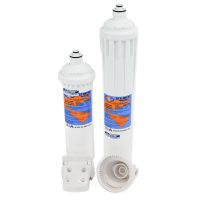
Omnipure™ ELF Food Service & Coffee Machine Triple Action Water Filter Kit
Omnipure™ ELF Food Service & Coffee Machine Triple Action Water Filter & Head. Ideal for espresso coffee machines and food service applications. Includes Omnipure ELF water filter and Omnipure Head… View ArticlePrice range: $130.50 through $150.40 Select options This product has multiple variants. The options may be chosen on the product pageOmnipure™ ELF Food Service & Coffee Machine Triple Action Water Filter Kit
Omnipure™ ELF Food Service & Coffee Machine Triple Action Water Filter & Head. Ideal for espresso coffee machines and food service applications. Includes Omnipure ELF water filter and Omnipure Head… View Article -
 NEW!
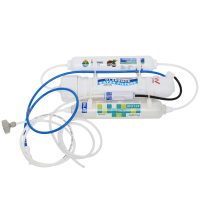
NEW!HPF-BT-RO 3 Stage Reverse Osmosis Benchtop System For Brewing and Spiritmaking
HPF-BT-RO – 3 Stage Reverse Osmosis System ideal for brewing and distilling. Creates water free of impurities that may impact your brewing or distilling and provides a blank slate for building the ideal flavour profile.HPF-BT-RO 3 Stage Reverse Osmosis Benchtop System For Brewing and Spiritmaking
HPF-BT-RO – 3 Stage Reverse Osmosis System ideal for brewing and distilling. Creates water free of impurities that may impact your brewing or distilling and provides a blank slate for building the ideal flavour profile.

Under Sink Water Filters
Under sink water filters are an affordable and convenient way to filter common contaminants from your water including chlorine, sediment, and bad taste/odour.
Water filters dramatically improve the taste and appearance of your water, while protecting you and your family from some potentially dangerous contaminants.
Systems For Your Home
We sell a wide range of compact under sink filter systems designed to sit under a kitchen bench or inside a nearby cupboard. The entire unit is out of sight and doesn’t take up valuable space on your benchtop.
An under sink filter can be used to feed one or more taps in your kitchen, along with fridges, ice makers and other water consuming appliances.
These systems are also a great option for providing delicious filtered water in an outdoor entertaining area or under a home bar. A great way to make your next BBQ even more enjoyable.
Filtering your water using an under sink filter system will produce drinking water that is safe and healthy. The perfect way to protect your family’s health and make drinking water much more enjoyable!
Systems For Your Business
Commercial operating environments like restaurants, bars, and cafes can also benefit from the use of an under sink water filtration system.
They can be used for food preparation, ice production, making coffees, or for producing delicious cold water for customers.
Water filtration not only improves customer satisfaction — it can protect sensitive equipment from limescale and sediment related abrasion damage.
At Clarence Water Filters, we carry a wide range of under bench filter systems which reduce contaminants such as Dirt, Sediment, Chlorine, Fluoride, Bad taste, Odours, Heavy Metals, Bacteria, Cryptosporidium, Giardia, and much more.
If you are looking for a system that filters 100% of the water coming into your home (not just drinking water), check out our Whole House Water Filter Systems.
Please continue reading to learn more, or contact us on 02 6646 8565 or via email if you have questions. We offer free, no-obligation advice.
Types of Undersink Water Filter Systems
There are multiple types of undersink filter systems available but they can all be placed into one of three broad categories:
High Flow Under Sink Water Filter Systems
High flow undersink filter systems connect to your cold water line using braided stainless steel lines.
They filter 100% of the cold water being used by a mixer tap tap or appliance.
High flow filter systrems are designed to support higher flow rates — typically up to 5-6 litres per minute (depending on the filters used).
High flow units are the perfect choice when:
- You don’t want to install a dedicated drinking water tap
Most under sink filter systems will use a dedicated drinking water tap or a 3-way tap for serving the filtered water they produce. You may not want a dedicated tap, as you have a stone bench top, you don’t have enough room, or you simply don’t like the look of having a second tap on the bench. In this case, high flow may be the better option as it can operate through your mixer tap. - You have relatively high quality water so don’t need ultra-fine filtration
If you live in a location like Sydney or Melbourne, your water quality is already ‘reasonably’ good. For most people, the main concern in these areas will be taste/odour and chlorine. If that is the case, you may decide that you only need to filter down to 5 microns, which most high flow units will achieve with ease. - You prefer a simple installation
High flow units typically have a much easier installation process. For example, our Twin High Flow Systems only require you to screw on a couple of braided stainless steel hoses. You won’t even need a plumber. - You are renting and are wanting to take the system with you and are unable to make permanent changes to your kitchen or under sink plumbing configuration.
The only draw backs of high flow units are:
- Filters can be depleted faster
100% of your cold water is being filtered so every time you turn on the cold water tap you will be using up filter capacity. If you use your cold water tap a lot when rinsing plates or watering plants, you may find that your filters need to get replaced more often. - Filters are less fine
High flow units typically have filters which aren’t as fine as systems with dedicated taps as they must support higher flow rates. This means they are less capable of capturing ultra-fine sediment particles. - Not ideal for some media types
Certain types of filter media require a lot of contact time to be effective. If you wanted to remove fluoride, for example, you need to have more contact time between media and water — which means a slower flow rate is required. This makes it more challenging to use in a high flow setup.
Under Sink Water Filter Systems With Dedicated Tap
These water filter systems send filtered water to a dedicated drinking water tap or appliance. Can also be used with 3-way taps (see below).
Using this type of unit means you will have an additional lever or spout just for your filtered water.
Systems with a dedicated tap typically have a slower flow rate (< 2 Litres per minute) and use ultra-fine filters and/or membranes (for reverse osmosis).
Systems with a dedicated tap are ideal when:
- You Need To Reduce More Challenging Contaminants
Reducing contaminants like heavy metals and fluoride require the use of specific filters which work at a slower flow rate. They are best used with a dedicated tap, as it will typically flow at around 2 litres per minute. - You Want To Use Reverse Osmosis
Reverse osmosis systems use a combination of ultra-fine filters and membranes to create very pure water. However, they can only deliver this water at a relatively slow rate, using a dedicated tap. - You Have Plenty Of Room Available
If you have the space on your counter top so a dedicated tap will easily fit.
Under Sink Water Filter Systems With 3-Way Tap
3-way taps look similar to a standard mixer tap, but they have an additional lever for turning on filtered water. This lets you access filtered and unfiltered water from a single tap.
View our taps page to take a look at the 3-way taps that are currently available. If you’d like to use a 3-way tap, purchase the filter system with ‘no tap’ then choose the 3-way tap of your choice.
If you need help deciding which system to purchase, give us a call or send an email today.
Undersink Water Filter System Filter Options
There are several types of water filters available for undersink filtration units.
Most under sink systems will contain several filters to achieve a variety of goals and remove many different contaminants.
There are also filters which make beneficial changes to your water, including alkalisers and mineralisers.
There are quite a few options listed below, which can be a little overwhelming. Please get in touch if you’d like some advice on the best option for your budget and filtration goals. Contact us on 02 6646 8565 or via email
The most common filter types are:
Sediment Filters (Particulate Reduction)
There are several different types of sediment filters including:
- String Wound Sediment Filters
String wound filters are made from a fine cotton or polypropylene string wrapped around a cylindrical core. They are an older technology and less commonly used today as there is more risk of sediment pushing through the filter. However, they remain useful for filtration of high temperature liquids. See our 10 inch cotton wound filters and polypropylene string wound filters. - Polypropylene / Polyspun Sediment Filters
The most common sediment filter type in under sink water filtration systems. They are made from very fine polypropylene strands wrapped or ‘polyspun’ into a cylinder. They are very affordable and provide excellent performance. Check out our polyspun filters. - Graded Depth Polypropylene Filters
Graded depth filters have multiple layers of polypropylene strands with gradually increasing density. This gives the filter progressively finer filtration as you approach the middle of the filter. A 5 micron graded depth filter might start with 10 microns on the outside, then have a section of 7 microns and finally a 5 micron core. This helps sediment push deeper into the filter, giving it more dirt holding capacity and improved flow. View some of our graded depth filters. - Pleated Washable Sediment Filters
Pleated washable filters are made with a thin paper-like material made from pleated polypropylene or polyester fibres. The pleats have a lot of surface area and can support higher flow rates. This type of filter can be washed several times, but they are typically more expensive than a disposable polyspun filter. - Pleated Membrane Filters
Thse are ultra-fine filters normally used for commercial food production, laboratories or medical facilities.
Carbon Filters (Chemical and Bad Taste/Odour Reduction)
Carbon filters are made by processing a type of carbon so it has a huge number of pores on it’s surface. When water flow through the filter, these pores can absorb contaminants or change their form, usually through oxidation.
These days, most carbon filters are made using crushed coconut shell, a sustainable and eco-friendly material.
Activated Carbon can reduce a huge range of contaminants including bad taste/odour, chlorine, chloramines, pesticides, herbicides, PFAS/PFOS and more.
Specialty carbon filters can also reduce heavy metals and can be more effective at difficult to reduce chemicals like volatile organic compounds.
We have a wide range of under sink carbon filters in the standard 10″ x 2.5′ size.
Fluoride Reduction Filters
There is some concern that artifically boosting the level of fluoride in the water may have some negative health consequences,
Fluoride reduction filters will absorb most of the fluoride in the water. Reverse osmosis membranes can also be used to trap fluoride molecules.
Polyphosphate (Scale Reduction)
When these minerals are sequestered, it becomes more difficult for them to precipitate from the water to form hard limescale. It can also limit corrosion from water hardness.
Ion Exchange Filters (Hardness and Salt Reduction)
Cation resins will remove positively charged molecules from the water, like calcium, magnesium. This type of resin is often referred to as a ‘softening’ resin as it reduces minerals which cause water hardness and limescale. It is often used in filters for coffee machines and steam ovens, which need to be protected from limescale.
Anion resins will remove negatiuvely charged particles like nitrates, sulfates, and silica,
Mixed bed resins contain both anion and cation resins. They can reduce the TDS of water to a very low point (as low as 0 TDS). This type of resin is often used in spot free systems, as it eliminates mineral spotting. Homebrewers and distillers also use it to create water that is a ‘blank slate’.
Alkalising / Mineralising Filters
Mineralisers work in a similar way, but may introduce a wider range of minerals, required for health reasons.
Reverse Osmosis Membranes
It only allows small water molecules to pass through while rejecting larger impurities based on size and electrical charge. The impurities are washed from the membrane into a drain line as waste. Membranes are useful for drinking water, desalination, agriculture and industrial processes.
Membranes can filter down to 0.0001 microns (approximately 0.1 nanometers) in size. However, this will vary based on several factors including membrane quality, age of membrane, flow rate, pressure, water temp and more.
Which Under Sink Water Filter Is Right For Me?
There are quite a few options available. Please refer to the table below, which will give you a good starting point based on your requirements.
If you require any assistance choosing a filter system, please get in touch with us.
| My Situation | Solution |
|---|---|
| Chlorinated Town Water Using Mixer Tap | Single 10″ High Flow System Twin 10″ Hiigh Flow System 3M High Flow System |
| Chlorinated Town Water Using Dedicated Tap | Single 10″ Under Sink System (Town) Twin 10″ Under Sink System (Town) 3M Under Sink Filter System |
| Tank Water Using Mixer Tap | Single 10″ High Flow System (Tank) |
| Tank Water Using Dedicated Tap | Single 10″ Under Sink System (Tank) Twin 10″ Under Sink System (Tank) Twin 10″ with LED Steriliser (Tank) |
| Require fluoride reduction | Twin 10″ Under Sink. With Fluoride Reduction Triple 10″ Under Sink with Fluoride Reduction |
| Moderate hardness reduction is needed | Omnipure ELF under sink system 3M Under Sink System |
| Major hardness reduction is needed | Brita under sink filter system |
| Looking for ultra-pure water | Alkalising Reverse Osmosis System |
Benefits of Installing an Under Sink Water Filter in Your Home
There are many benefits, including:
Removal of potentially dangerous contaminants
Delicious Pure Water!
Less risk of chronic disease
Neutralisation of pathogens
Under Sink Water Filter FAQ — Your Questions Answered
General Questions
What is an Under Sink Water Filter?
These types of units are usually compact, as there is rarely much room under a sink. They are also designed to be inserted along the water line, between the water inlet and a tap on the sink.
Under sink water filters systems will remove contaminants from your water, making it safer and more enjoyable to consume. The types of contaminants removed will depend on the filters you decide to install.
Due to the simple installation process and minimal space required, under sink systems are perfect for most homes, apartments, and offices. The smaller units can even be used in tiny homes, caravans, motor homes, and RVs.
Filter Questions
How Long Do the Under Sink Filters Last?
- The amount of water being put through the filter
The more water being put through the filter, the faster the filter’s contaminant reduction capacity will be used up. - The quality of the water
If your water is quite clean and does not have high levels of chemicals, your filters will last much longer. - The type of filter being used
The quality of the filter and the type of media it contains can determine lifespan. For example, a chlorine filter have a longer lifespan that a fluoride filter, because of the type of media being used.
However, in general terms, the average 2-4 person household will get:
- 12 months from carbon filters filters like the WC04 or AP1025KDF/GAC.
- 12 months from sediment filters on reasonably good water. 6 months if your water is quite dirty.
- 6-12 months from a fluoride reduction filter. These filters have lower capacities (typically around 1,900 litres), so a busy household may use up the filter before 12 months.
What Is The Most Popular Filter Option For Town Water?
The 10 x 2.5″ 1 micron polyspun filter will reduce sediment down to 1 micron. This is then followed by the WC04 0.45 micron carbon block. This filter has a super fine micron rating which is great for reducing chlorine, chloramines, lead, heavy metals and microplastics. It is also cyst rated for Cryptosporidium / Giardia.
What Under Sink System Should I Use For Tank Water?
Tank water filtration focuses on reducing sediment, decaying organic matter, bacteria & viruses, chemical overspray and much more.
If you don’t have or are unable to install a Whole House Filtration System then we would recommend installing an Under Sink Filtration System.
For the ultimate protection against harmful viruses, bacteria and pathogens we would suggest a system that includes UV sterilisation such as the Twin Under Sink Water Filter System with LED UV Steriliser.
This system uses the following 3 stages to produce safe and delicious tasting filtered water:
Stage 1: 10 x 2.5″ 1 Micron Polyspun Filter
Stage 2: 10 x 2.5″ GTS1-10 1 Micron Silver Carbon Block
Stage 3: LED UV Steriliser
The LED UV Steriliser differs from most UV systems in that the lamp does not require replacement. The system operates on a 5000 hour countdown timer which is only triggered when water is passing through the UV system meaning this little units have a great lifespan!
If an system with a UV component is not what you are after then we would recommend a Twin Under Sink System with filter specialised for tank water.
Can I Reduce Fluoride With An Under Sink System?
To reduce Fluoride you will want to use a filter specifically designed for this task. Our Twin Under Sink Fluoride Water Filter System comes with two filter options for Fluoride removal.
Option 1: 1025PS0.5 & 1025Cerametix. The first stage 1025PS0.5 is a sediment filter. The second stage is a cleanable Cerametix Fluoride up to 92%, Chloramines and Heavy Metal Reduction cartridge.
FL051 & WC04. The first stage FL051 activated alumina Fluoride filter attracts the Fluoride reducing over 90% even after 1900 litres of water. The second stage WC04 Multipure 0.4 micron carbon block filter reduces chlorine bad taste and odours, heavy metals.
Both options will perform well, however it is important to be aware that the ceramic filters will require regularly scrubbing to keep it functioning well.
For particularly sediment heavy water supplies the Triple Under Sink Fluoride Water Filter System includes an additional polyspun sediment filter in the first stage to extend the life of the more expensive Fluoride and Carbon filters.
What Under Sink System Should I Use For Hard Water?
It is usually described using the amount of calcium carbonate CaCO3 present in the water in milligrams per litre (mg/litre CaCO3).
Hardness levels can be categorised using the following;
Soft water is < 100 mg/l CaCO3
Slightly hard is 100 – 150 mg/l CaCO3
Moderately hard is 150 – 200 mg/l CaCO3
Hard is 200 – 300 mg/l CaCO3
Very hard is More than 300 mg/l CaCO3
If your water is is Soft to Slightly Hard, then a carbon filter containing polyphosphate can be used in your filter system for scale reduction.
Polyphosphate dissolves in water, sequestering (wrapping up) calcium molecules so they can’t precipitate from the water as easily to form limescale.
Polyphosphate may also be partially effective on Moderately hard water, but results will vary based on water chemistry and usage.
ion exchange resin provides a more reliable solution and one that works well on harder water sources.
Resin captures calcium and other dissolved minerals, exchanging those molecules for an inert molecule like sodium or hydrogen.
In terms of under sink systems, the most popular ion exchange resin units are made by Brita.
Brita filters combine sediment, carbon and resin filtration, which reduce particulates such as dirt, sand and rust, chemicals such as chlorine and total dissolved solids such as calcium and magnesium.
When used with a Quell ST filter, Brita filter systems allow you to adjust the resin bypass setting on the filter head. This lets you adjust the amount of water going through the resin and therefore the level of minerals in your water.
The adjustable head is a very useful feature for coffee enthusiasts, as you can tweak calcium levels. Calcium adds brightness to the flavour of brewed coffee so you can add or remove it to balance flavour, filter longevity, and limescale reduction requirements.
Brita Under Sink Systems are a great option for areas with particularly hard water such as Western Australia and outback Queensland.
Installation Questions
Can I Install an Under Sink Filter System Myself?
Most of the components are plug-and-play. Which means it’s a matter of pushing tubing into a hole or screwing in a fitting.
However, some systems are harder to install than others. If the system has a dedicated drinking water tap, then you will need to create a hole in your countertop or sink. This involves the use of a 12mm hole saw, which might be a little daunting for some people.
There may also be some thread taping involved and checking of the unit for leaks. If you aren’t comfortable with that, then getting a plumber in is probably a good idea.
It would take most plumbers between 15-45 minutes to install an under sink filter unit. It will vary depending on plumber experience, ease of access, and the type of system being installed.
High flow filter systems are usually the easiest to install as they normally connect to your water supply and sink tap using standard 1/2″ braided lines. They can be screwed on using an adjustable spanner.
Do I Need An Under Sink Water Filter System If I Have A Whole House System?
Typically, a Whole House Water Filter System will filter down to 5 micron, whereas an Under Sink Water Filter System can filter down to as low as 0.2 micron depending on the system and filter you purchase.
While it is possible to put 1 and 0.5 micron filters in a Whole House Water Filter System it can cause reductions in flow rate. If finer filtration for your drinking water is what you are after then we would recommend an Under Sink System.
Can I Take My Under Sink System With Me When I Move?
If you are wanting an Under Sink Filter System that you can take with you when you move house then a High Flow System with braided lines might be the best option.
This will mean that when it comes time to move you can simply disconnect the braided lines that came with your filter and reconnect the original braided lines between the cold water line and the faucet.
This is also a great option for renters!
Another option would be a counter top water filter, which screws directly onto your tap spout.
Can I Use An Under Sink Filter System With My Existing Faucet?
These systems come with 1/2″ braided line which can be installed directly onto your cold water line and existing faucet. They also come with filters that are specifically designed to operate under higher flow rates.
The High Flow Twin Under Sink System is a great option for those looking to use their existing faucet.
Can I Have An Under Sink Water Filter System If I Am Renting?
Renters don’t have to suffer bad water! Whilst the bench top systems are a popular option for renters, some people either don’t have the bench top space or don’t like the idea of a system sitting on their bench.
An Under Sink High Flow System is installed directly onto your cold water line, delivering filtered water straight to your existing faucet. There are a number of great high flow options including:
The Twin High Flow System is a versatile option that takes a standard 10 x 2.5″ filter. The benefits of this system is that by using 2 filter cartridges we are maximising filtration capacity from both the sediment and carbon filtration. It is available with the following filter options:
1025PS1 & GTS1-10 (Tank Water)
1025PS5 & AP1025KDF/GAC (Town Water)
FL051 & AP1025KDF/GAC (Town Water/Fluoride Reduction)
1025PS5 & 1025PHOS/GAC (Town Water/Scale Reduction
The 3M HiFlow Under Sink Filter System is a single quick change filter system that also has a number of filter options. The advantage of this system is it’s quick change functionality and its more compact design.
Why Choose Clarence Water Filters?
Clarence Water Filters have a under bench water filter system for every application.
We also have a range of conversion kits to replace any brand of water filter to a more affordable replacement cartridge type of system.
Customers can choose from a range of water filter faucet taps including 3 in 1 kitchen mixer taps that allow you to just have the one tap for Cold, Hot and Filtered water.
With the right filters you will never need to boil drinking water again. If you need help in choosing the right system for your needs, just contact us at Clarence Water Filters for great advice.